168.18.6 Admin Login and Network Configuration Tutorial
The guide examines secure access to the 168.18.6 admin interface and the steps to authenticate before a session begins. It outlines essential security settings, including restricted access and audit logging, and then details foundational network configuration suited for a small office. The discussion introduces baseline IP addressing, routing, and firewall rules, with an emphasis on segmentation and resilience. It ends with a framework for diagnostics and optimization, inviting further exploration of the practical implementations ahead.
How to Access the 168.18.6 Admin Interface
To access the 168.18.6 admin interface, the user should open a web browser and navigate to http://168.18.6. The access protocol requires valid credentials to initiate a session.
Upon authentication, administrators may inspect status pages, configure endpoints, and initiate a firmware update when appropriate, ensuring compatibility and rollback options.
Documentation guides remain essential for disciplined, freedom-conscious administration.
Essential Security Settings for 168.18.6
Strengthening access controls is essential for the 168.18.6 device; administrators should enforce strong authentication, restrict administrative interfaces to trusted networks, and implement account management practices that minimize exposure. The discussion outlines security principles guiding role-based access, regular credential audits, and audit logging.
It emphasizes timely firmware updates, vulnerability remediation, and configuration hardening to sustain resilient, autonomous operation within a transparent security posture.
Basic Network Configuration for a Small Office
Basic network configuration for a small office establishes the foundational topology and parameterization required for reliable connectivity.
A detached analysis specifies IP addressing schemes, routing primitives, and firewall rules, enabling scalable growth.
Data privacy is enforced through access controls and segmentation.
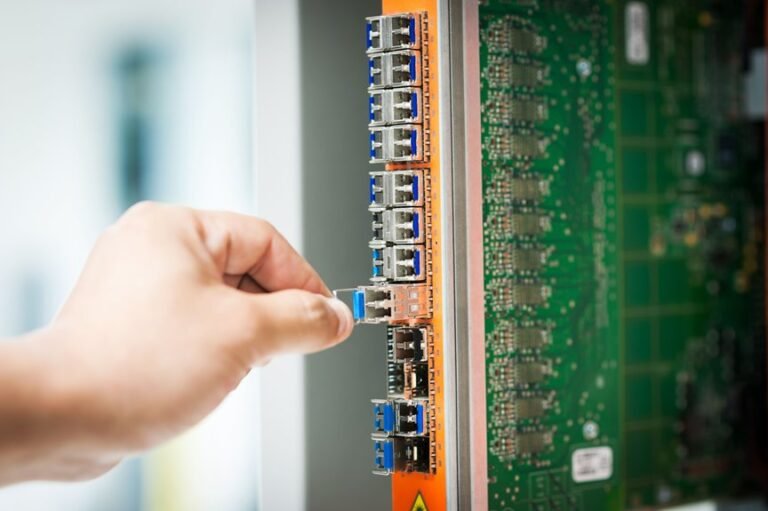
Wavelength routing considerations optimize optical backbone utilization, ensuring predictable latency.
Documentation emphasizes repeatable procedures, auditability, and minimal human error for sustainable operation.
Troubleshooting and Quick Performance Tweaks for 168.18.6
Troubleshooting and quick performance tweaks for 168.18.6 focus on rapid issue isolation and parameter adjustments to restore or improve throughput. The procedure emphasizes systematic diagnostics, monitoring, and targeted changes without overhauling architecture.
It analyzes network topology and bottlenecks, implements conservative latency optimization, then validates results with repeatable tests, documenting configurations and outcomes for repeatable, disciplined performance improvements.
Frequently Asked Questions
Can I Access the Admin Interface From Remote Networks Securely?
Remote access is possible with secure practices; however, exposure risks require robust security hardening. The user should employ VPN, MFA, encrypted channels, access controls, and regular audits to balance remote administration needs with preserved autonomy and safety.
What Are the Recommended Firmware Update Practices for 168.18.6?
Firmware update practices emphasize routine schedules, integrity verification, and rollback capabilities; device should implement secure, signed updates with encryption. For security hardening, apply patches promptly, monitor release notes, and maintain documented change control to preserve freedom and reliability.
How Do I Backup and Restore Router Configuration Settings?
“Backups protect continuity.” The article explains how to perform backup tips and restore steps: a precise, methodical process detailing export of current configuration, saving file securely, and reapplying settings to the router after resets or hardware changes.
Are There VPN and Remote Management Options Available?
VPN access and remote management are available, though configuration depends on the device. The approach is methodical: enable secure VPN, configure authentication, set firewall rules, and activate remote management with IP restrictions and encrypted channels for flexible, controlled access.
How Can I Monitor Bandwidth Usage per Device on 168.18.6?
A hypothetical network admin demonstrates monitoring bandwidth by device, showcasing real-time dashboards. The approach emphasizes device visibility, enabling per-device usage tracking, traffic baselining, and alerts. Monitor bandwidth across interfaces, logging, and throttling policies for clarity and control.
Conclusion
In closing, the administrator performed deliberate, repeatable steps: login securely, verify authentication, and audit access; deploy hardened settings, enforce service boundaries, and restrict management to trusted networks; monitor status pages, log events, and apply firmware updates; implement baseline IP schemes, precise routing, and clear firewall rules; segment sensitive resources, enforce least privilege, and document changes; test connectivity, validate performance, and tune configurations iteratively; sustain resilience through disciplined maintenance, measured revisions, and perpetual verification.